There's a particular kind of weight you carry growing up inside your family's business. It is heavy, but the kind of heavy that roots you and holds you up.
Knowing the smell of the hot grill before you even know your own home address. Learning to work a register before you even learn how to drive. You spend your childhood a little embarrassed by the truck, the uniform, the way you always smell faintly of what is cooking in the kitchen.
Then one day, you grow to understand: That smell was the most honest thing you have probably ever carried with you.
I know that weight secondhand. As the child of a maintenance man and a house cleaner turned CNA (Certified Nursing Assistant), I recognize the feeling.
Across Los Angeles, a generation of kids raised in loncheras, taquerías, and mariscos spots is stepping into ownership of their family’s businesses; they are the next generation.
They went to college. Some of them left, tried other things, and chased other dreams. But they came back. Not because they had to, but because they finally understood what their parents built, and what it would cost. Not only to their families, but to those customers who had become extended family members themselves.
These offspring will tell you it is about tacos, about mariscos, about the carne asada. It is not. It is about legacy, survival, and refusing to disappear from a city that keeps trying to price them out of these spaces.
TIJUANAZO
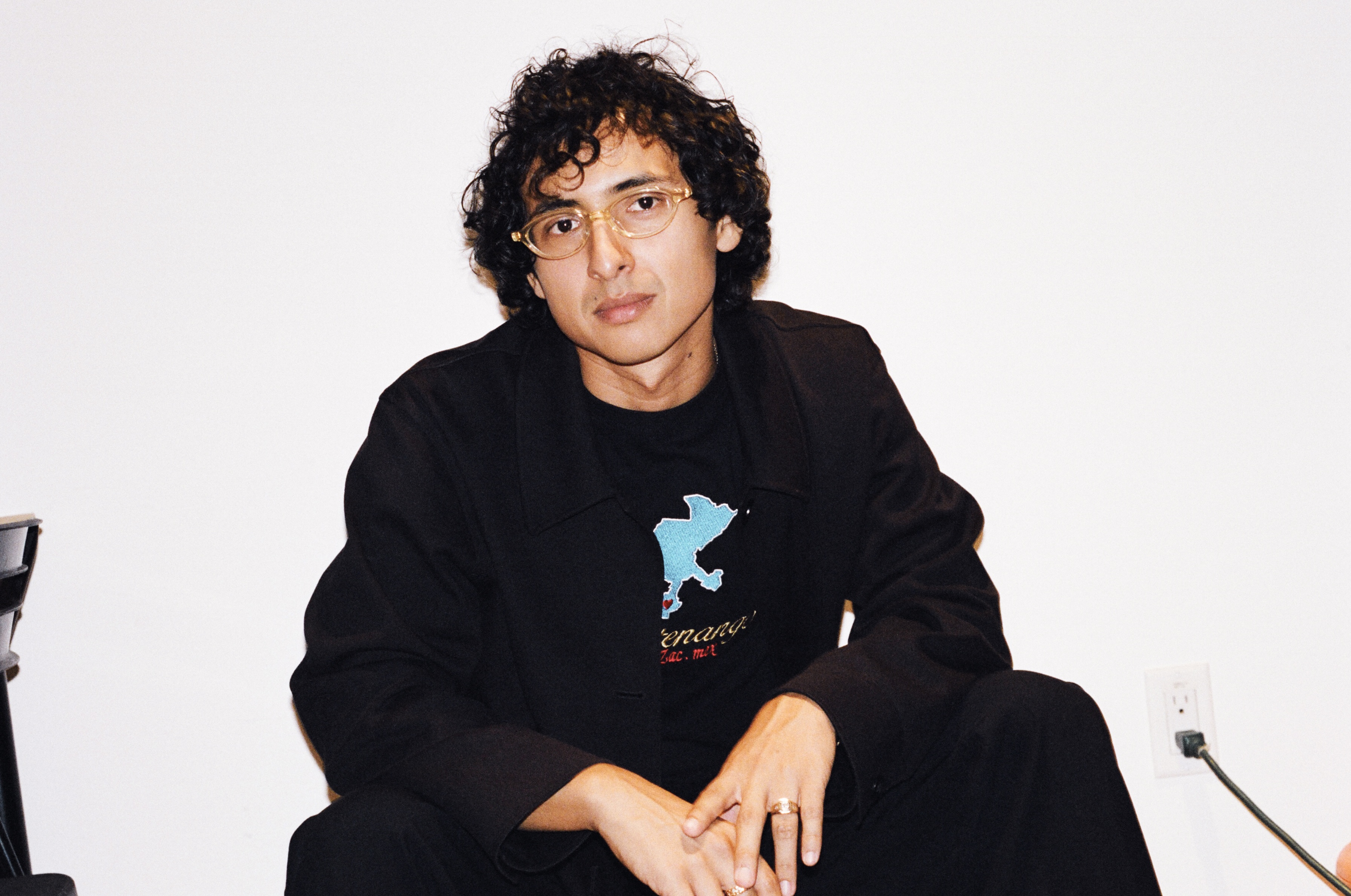
ARIA ESQUIVEL, BRINGING THE TASTE OF TIJUANA TO EAST L.A.
“The dream was always to bring it north,” said Esquivel.
For years, Tijuanazo was only in Tijuana, a taco chain with seven locations serving some of the city’s most beloved Tijuana-style tacos.
Aria Esquivel grew up inside that dream, watching her parents, Antonio and Claudia, pour their whole lives into it. She watched them work hard and put their passion into something real. It inspired her.
So when she was working in real estate and wanted something that felt more “hers,” Esquivel went to her parents and asked the question that would change everything: “Can we do it? Can I bring it over here?”
They said yes. But also said she'd have to figure most of it out herself.
“They were wanting me to be independent in that sense,” Esquivel says, noting that it was something like, “You're gonna have to figure all these steps out. But we're always gonna be right there to back you up.”
“It was exciting, scary, and challenging all at once,” she tells L.A. TACO.
Esquivel had no idea how complex it was to open a business in this country, even after a lifetime of watching her parents do it. She learned the hard way. It took two years. Esquivel scouted Downey, South Gate, and a dozen different areas before a spot in East L.A., where she lives, popped up and felt like home.
“I love the community. I love being surrounded by everything here. It's where I feel most comfortable,” she says. She spent two years working with contractors, obtaining permits, and getting everything to code. Two years of learning just how much of yourself a dream demands before it ever feeds one single customer.
Tijuanazo made its L.A. debut on August 23, 2024. Its two-year anniversary was this past August, and an Echo Park location is on the way, waiting on a final inspection.
“I'm very proud of the fact that we're still here,” she says, the disbelief still audible in her pride for what she has built.
Everything she serves comes from the same menu her family has served since 2008, and the ingredients they can't get here, they import directly from Tijuana rather than compromise the flavor by even just a little.
What Esquivel wanted to do differently had nothing to do with the food. Everything she serves comes from the same menu her family has served since 2008, and for ingredients they can't get here, they import directly from Tijuana rather than compromise the flavor, even a little.
“We don't want to compromise on anything,” she said. Keeping the flavor exact is how she honors the people who built it all before her.
What she wanted was a seat at a table that has never made much room for women.
“The taco industry is very male-dominated,” she says. “I wanted us to be part of the conversation, this new generation of women coming into this space, that we have a voice, we have our say, and we're very good at what we do.”
Her sister Karime Esquivel runs Tijuanazo in San Diego. Between the two of them, they've claimed both ends of the map.
“The taco industry is very male-dominated,” she says. “I wanted us to be part of the conversation, this new generation of women coming into this space, that we have a voice, we have our say, and we're very good at what we do.”
Every marinade, every fresh sauce, every batch of adobada prep, Esquivel still takes part to prepare herself, working out of a market in Lincoln Heights. She may not be standing at the grill, but the flavor runs through her hands first.
“I'm making all those marinades for them to be able to do that,” she says. It is her way of being present in every taco, even the ones she never touches.
Any hesitations, she admits, were never really about the tacos. They were really about herself.
“The scariest part was the pressure of all that responsibility,” she says. “All these people are here for you. They're gonna depend on me showing up, being responsible, doing what I need to do to keep this working.”
It is the fear of every person who has ever been handed something this precious: not that the thing will fail, but that they will be the one to fail at it.
“I believe God and the universe are with me all the time,” she says. “Whatever struggle, whatever thing I need to face, I'll be able to move forward.”
For anyone standing where she stands, afraid they won't be enough, Esquivel offers words of encouragement.
“You have to really believe in yourself, that you're gonna be able to achieve what you set out for,” she says. “As long as you're disciplined, as long as you're showing up, everything's gonna work out. There's no reward if you don't risk it. Give yourself that chance to really see what you can do.”
Tijuanazo ~ 355 S. Atlantic Blvd. East Los Angeles, CA 90022
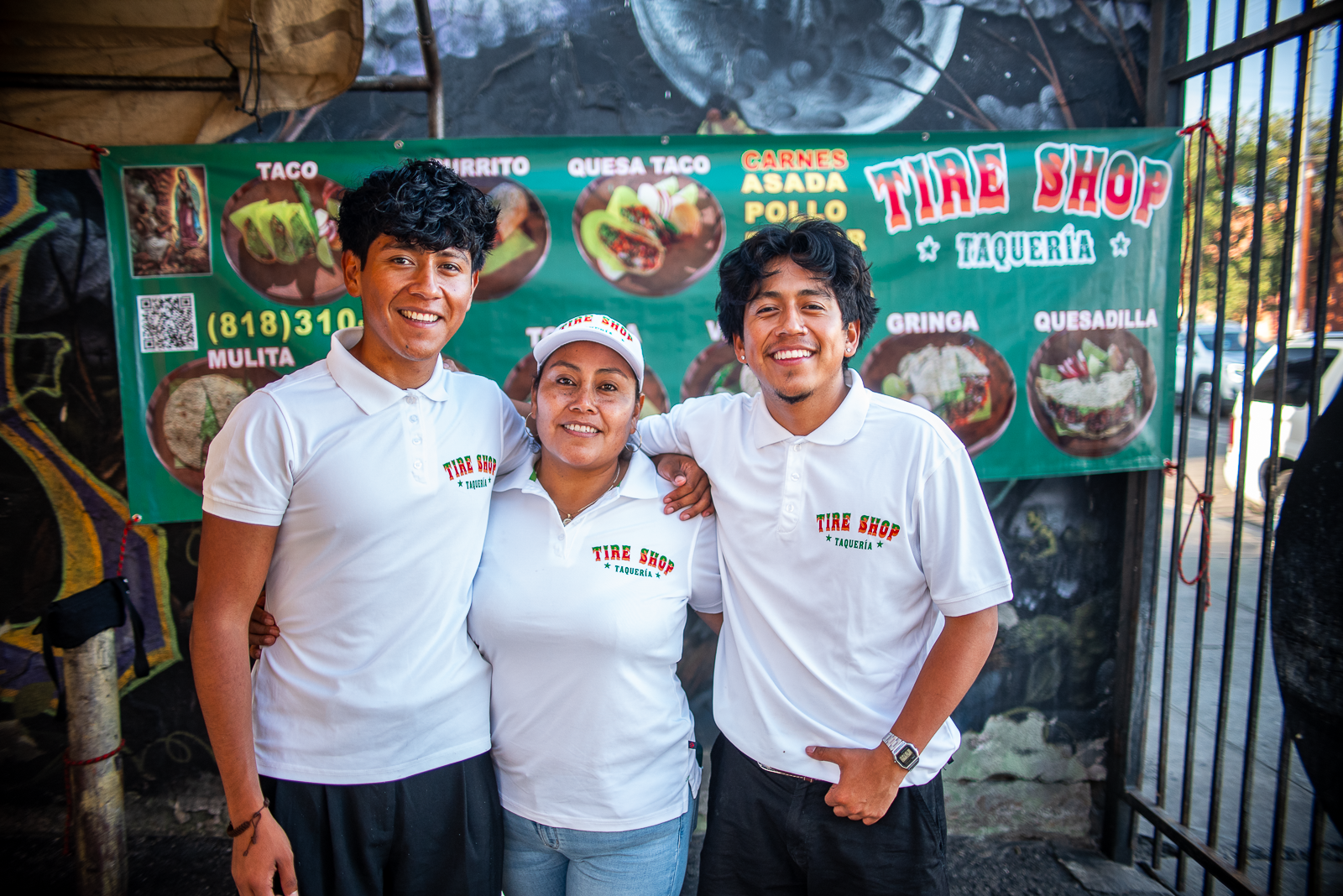
TIRE SHOP TAQUERIA
TWO BROTHERS, TWO UCLA DEGREES, AND A BUSINESS THEIR PARENTS BUILT FROM NOTHING
Tire Shop Taquería has a reputation for serving some of the best carne asada tacos in L.A. But before Alejandro and Joel Salas were taqueros, or UCLA graduates, they were kids at a swap meet, learning what it costs to survive in this country.
Their parents came up as farm workers in the Central Valley, where the boys spent their first 10 years tagging along to sell perfumes, churros, and elotes. When their padrino, who ran Tacos Poblanos, invited the family to come work in Los Angeles, “it was a terrifying risk for them,” Alejandro says.
Their parents had built a whole community in the Central Valley. Moving meant starting over with nothing, again.
Their parents came up as farm workers in the Central Valley, where the boys spent their first 10 years tagging along to sell perfumes, churros, and elotes.
The first year, it was just their dad. Then their mom moved in. Then four or five families packed into a three-bedroom apartment. The family moved 16 times over the years. Not once did the brothers have a room of their own. Alejandro didn't even know how rare that was until he got older and started telling people and watched the astonished looks on people’s faces.
Back then, street vending wasn't even legal. It was criminalized and dangerous. Alejandro remembers being younger and watching his family try to make an honest living while the city treated them like something to be swept off the corner.
“You see your family trying hard to make a living and people criminalizing it,” Alejandro says. That feeling never left him.
So he got a lot more involved in school and community. He became student body president. He organized around educational rights, teacher retention, and resources for first-gen students like himself. He ran the L.A. Marathon in 2015 and went straight to work at an event afterward, his family cracking up that he'd run 26 miles and then clocked in.
“I guess it's in my blood,” he says.
He got a full ride to UCLA, was headed for law school or a master's in public policy, working at nonprofits on housing insecurity, an issue he had lived through himself. Then the pandemic came. His mom got sick. She was hospitalized, and she survived.
“I could go to school, or I could stay behind and help my parents the same way they helped me pursue my education,” Alejandro says.
Alejandro came home after that visit and had to rethink everything. “I could go to school, or I could stay behind and help my parents the same way they helped me pursue my education,” Alejandro says.
That first year nearly broke him. The fear of the raids, the terror that his parents could be taken, and the weight of people depending on him all landed on his body at once. He had breakouts and anxiety. His hair started falling out.
“I was dealing with a lot of stress,” says Alejandro,
And still, he built. All the things his parents never had time to build: systems, employee manuals, contracts, a point-of-sale, uniforms, and a brand.
His friend, Graciella, a UC Davis marketing grad, designed Tire Shop’s logo: green for the guacamole they refuse to charge extra for, red for the meat, colors that carry more than one meaning for the family. The lettering came from graffiti and calligraphy Alejandro photographed on family trips to Puebla, where the family is from.
The name Tire Shop Taqueria wasn't even theirs. The community named it. Neither the Yelp page nor the Google listing was made by the family.
“The public created that,” Alejandro says. “From the very beginning, that's how we knew the community wanted us here.”
“The public created [the name Tire Shop Taquería],” Alejandro says. “From the very beginning, that's how we knew the community wanted us here.”
When people told them the corner was way too dangerous, that they'd never sell there, the neighborhood answered by showing up anyway. And it never left.
Alejandro learned early on not to grieve over a closed door.
“It's not rejection, it's redirection,” he says, a line his parents lived by, one that carried them from one lost spot to the next destination. Alejandro is a big believer in manifestation. He still has a photo of the journal where, back in 2023, he wrote down exactly what he wanted: to invest in his family, to uplift his community, to grow.
“And then from there, it just started growing,” he says.
Today, Tire Shop runs four locations and caters on weekends. Joel Salas, the younger brother, just graduated from UCLA, too. He's the one drawn to music, booking artists, urban planning, and the dream of turning the parking lot into a space for live shows and pop-ups.
He grew up skating Gilbert Lindsay Park, and even at 18, was booking artists and helping build block parties at MidCity Mercado, calling his mom to tell her what he'd been able to pull off.
“Me growing up in South Central changed a lot of my perspective in life,” Joel says. “It's a lot of lived experience.”
The brothers stay heavily involved in helping the community, overseeing biweekly food giveaways for elders who can't drive, many of them impacted by the raids. Their impact extends far from the shop, catering for the churches and the nonprofits that raised them. They observe their staff for burnout, because a lot of the people who've cooked alongside them for ten years aren't just staff. They're tíos/tias and family.
“It's not just a job,” Alejandro said. “It's a family environment now.”
Both brothers guard the same fear: growing too fast.
“If you go too quick, people get accustomed to mistakes,” Alejandro says. They want the tortilla and meat right every single time because they know how fast a name the community gave you can be a name the community takes back.
The brothers' advice to the next kid who may be weighing fears of ownership comes without hesitation.
They want the tortilla and meat right every single time because they know how fast a name the community gave you can be a name the community takes back.
“There's nothing shameful about helping your parents the same way they helped you,” Alejandro says. “Block the noise, focus on your family. They raised you, trust them. There's so much you can do.”
“Intertwine it with your own passions,” recommends Joel, in a softer but very sure voice. “Working with family is difficult. There are so many emotions to navigate. But find that balance, take care of your mental and emotional health, and follow your passions while you honor your family's journey.”
Tire Shop Taqueria ~ Locations in South Central, Downtown L.A., Hollywood, and near USC
MARISCOS MARIA
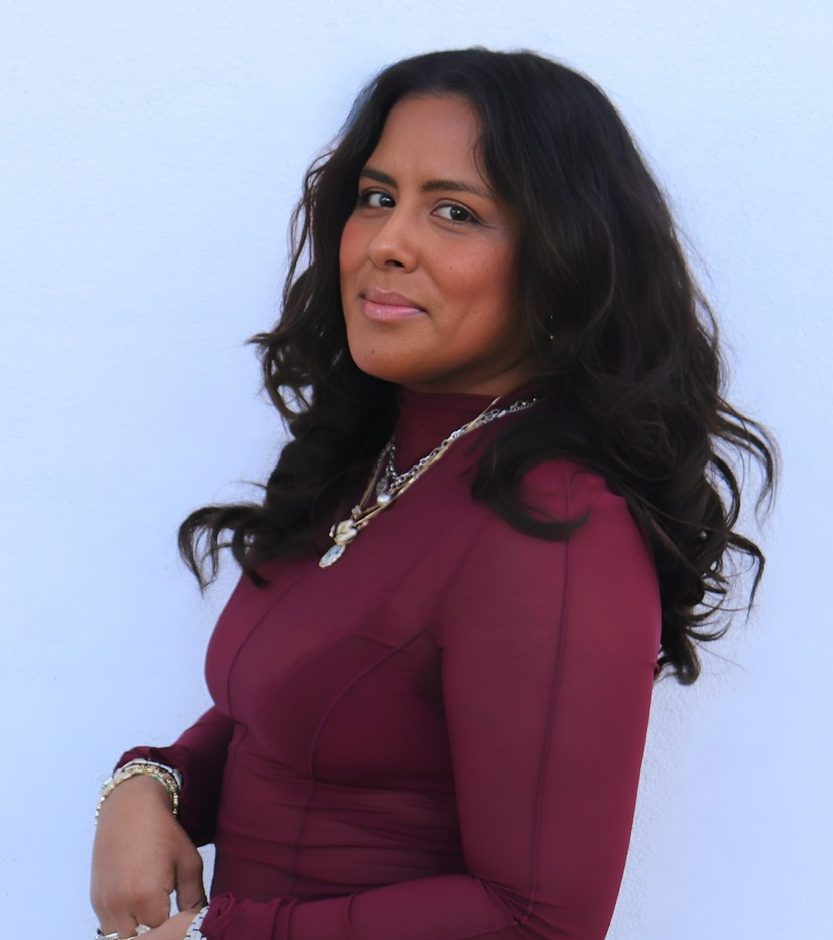
JASMINE MALDONADO SPENT HER CHILDHOOD IN A LONCHERA. NOW SHE FIGHTS TO KEEP THE FAMILY BUSINESS ALIVE IN WEST ADAMS.
Jasmine Maldonado's story with Mariscos Marias starts in a car seat, on the floor of a lonchera, while her mother worked.
In 1987, her parents bought the first Mariscos Marias food truck in the Vermont-Adams area, selling cámarones, tostadas, and ceviche, and building a clientele one plate at a time. Then, in 1997, the year Maldonado was born as the youngest of seven, her mother was left with nothing but the truck, a mountain of hidden debt, and an eviction notice.
“I don't even know how she was able to persevere,” Maldonado says. Momentarily struggling to find the right words.
Her mom, Maria Del Pilar Cuevas, was a single mother of seven who didn't speak English. She immigrated from Guadalajara at 16, sending money home for years before she ever spent it on herself. She grew up so poor that she made clothes out of what they had, old tire rubber for the soles of shoes, potato sacks sewn into dresses.
Then in 1997, the year Maldonado was born as the youngest of seven, her mother was left with nothing but the truck, a mountain of hidden debt, and an eviction notice.
That’s the woman who opened Mariscos Marias’ brick-and-mortar business in 2000.
“Anytime I talk about the restaurant,” Maldonado says, “I just emphasize how much our mom sacrificed, and why it's such a beautiful thing to carry as I get older.”
Every sibling worked. Cashier, cook, manager, bookkeeper—it took all of them.
Maldonado got the rare privilege of chasing a passion that wasn't “safe.” She went to FIDM for fashion, a full-circle nod to her mother, who had once been a sample maker and assistant designer downtown before pregnancy forced her to give it up. Everything Maldonado reaches for is quietly tied to something her mother was never allowed to keep.
Everything Maldonado reaches for is quietly tied to something her mother was never allowed to keep.
But fashion school made Maldonado feel like a stranger in her own city.
“Wait, this is my city,” she remembers thinking, surrounded by people who made her feel like she didn't belong anywhere near them.
What pulled her back, again and again, was the restaurant. The regulars who'd known her since the lonchera days. The cook who'd been there before it was even Mariscos Marias, another mother to her. Joanna, the waitress who watched her grow up. The simple grace of “qué gusto verte,” of really being just seen.
“Growing up first-gen can feel very isolating,” Maldonado says. “The restaurant was the one place it never did for me.”
When COVID hit, Maldonado was laid off from her job. She notes ”It was a strange time, because it was a very sad time but also the birth of so many entrepreneurs.”
Maldonado started selling clothes on Instagram, dropping off orders herself, telling girls to come pick them up at the restaurant. A rack out front turned into this weekend ritual of sorts and then finally into a boutique: Persona, which became the doorway to something so much bigger than just clothes.
Because everyone she met was talented and created something. A friend making candles, another making juice, another making jewelry.
Maldonado gave each of them a rack, a table, and a pop-up. Her brother, Giovanny Maldonado, started making micheladas in the parking lot. Friends brought DJs. Organically, without anyone planning it, the MidCity Mercado was born.
It was never just a market. In a neighborhood being hollowed out by redevelopment and gentrification, where one man owns more than 40 properties on West Adams Boulevard alone, the MidCity Mercado became an ecosystem: foot traffic keeping the restaurant alive, new neighbors spending in the local economy, a reason for the doors to stay open. Maldonado turned it into a 501(c)(3), with the mission of preserving culture and protecting families like hers before they get priced out.
She remains clear-eyed about the cost.
“I can't help other families if I can't help myself,” Maldonado says.
That reckoning is why, this year, she made the hardest decision yet: to step into ownership of the restaurant, to close her clothing store for a bit, changing focus to keeping the doors open and preparing the MidCity Mercado's Día de los Muertos celebration. Her dream is to one day buy the property and to feed a more stable income back into the nonprofit. Years of unstable income have taken their toll on her and her brothers' health.
“What pours right back into us and keeps us going is really the community," she says.
Maldonado credits her brother, Giovanny, who took over operations in 2008 at the height of the recession, pushing a terrified, teenage Jasmine to talk to the customers and, in doing so, changed her life.
Her mother finally got to retire. She lives in Guadalajara now, away from the stress, after a lifetime that was nothing but work. Her children gave her back her rest.
“It may be the most beautiful thing this family has ever built together,” Maldonado says.
When Jasmine Maldonado talks about the future, she talks about fear, the 2028 Olympics, the headlines of legacy businesses closing, which read like a countdown to a lot of other businesses.
“It feels like impending doom,” Maldonado admitted. Still, she keeps returning to the same answer.
“This administration's not gonna come save us. It's gonna be us saving each other,” she says. “The only way we fight through is through community, caring for each neighbor, having empathy for each other.”
“This administration's not gonna come save us. It's gonna be us saving each other,” she says. “The only way we fight through is through community, caring for each neighbor, having empathy for each other.”
She calls Mariscos Marias a symbol: one of survival, safety, and an example that she belongs here. When she talks about the land the restaurant sits on, the ofrenda they build every year for Día de los Muertos, the mural out back, her voice changes. This is sacred land to Maldonado.
“I feel like it's ancestral forces,” she says. “The spirits we honor, they work through us to push us forward.”
Maldonado still fights against guilt when taking a rest, the ancestral weight of a family that only ever knew how to work. She is healing from it. But Maldonado does not carry any of it by herself. She notes, “No lo hago sola.”
“Lead with a kind heart, to serve others,” words she offers to anyone standing unsurely on the edge of taking their own leap. “The times I've felt vulnerable and expressed it are the times I've been met with miracles. When you let go and let God, that's when things move in your life.”
She has those words tattooed on her hand, so she never forgets them: Let go and let God.
Mariscos Marias ~ West Adams: 5640 W. Adams Blvd. Los Angeles, CA 90016; Adams-Normandie: 2215 S. Vermont Ave. Los Angeles, CA 90007
WHAT THEY ARE ALL REALLY CARRYING
Three families. Tijuana tacos, carne asada from a spot the neighborhood named after a tire shop, and mariscos that have fed the same streets since the '80s.
Three kids who could have gone anywhere, who did go somewhere, and who chose, in the end, to pick up the thing their parents built and focus on carrying it forward.
It does not look the same for any of them. Aria is importing flavor across a border to keep a promise. The Salas brothers turned a swap-meet hustle into two locations and something closer to a movement. Jasmine is closing one dream to save another, and building an ecosystem to save a whole neighborhood while she's at it.
But underneath, it is the same thing. It is echarle ganas.
It is showing up when it would be so much easier not to. It is a generation that spent years a little embarrassed by the smell of the kitchen on their clothes, just to grow up to understand it was never a smell to escape from. It was a birthright.
A legacy was handed to them, and they took the reins to continue building what their parents started.