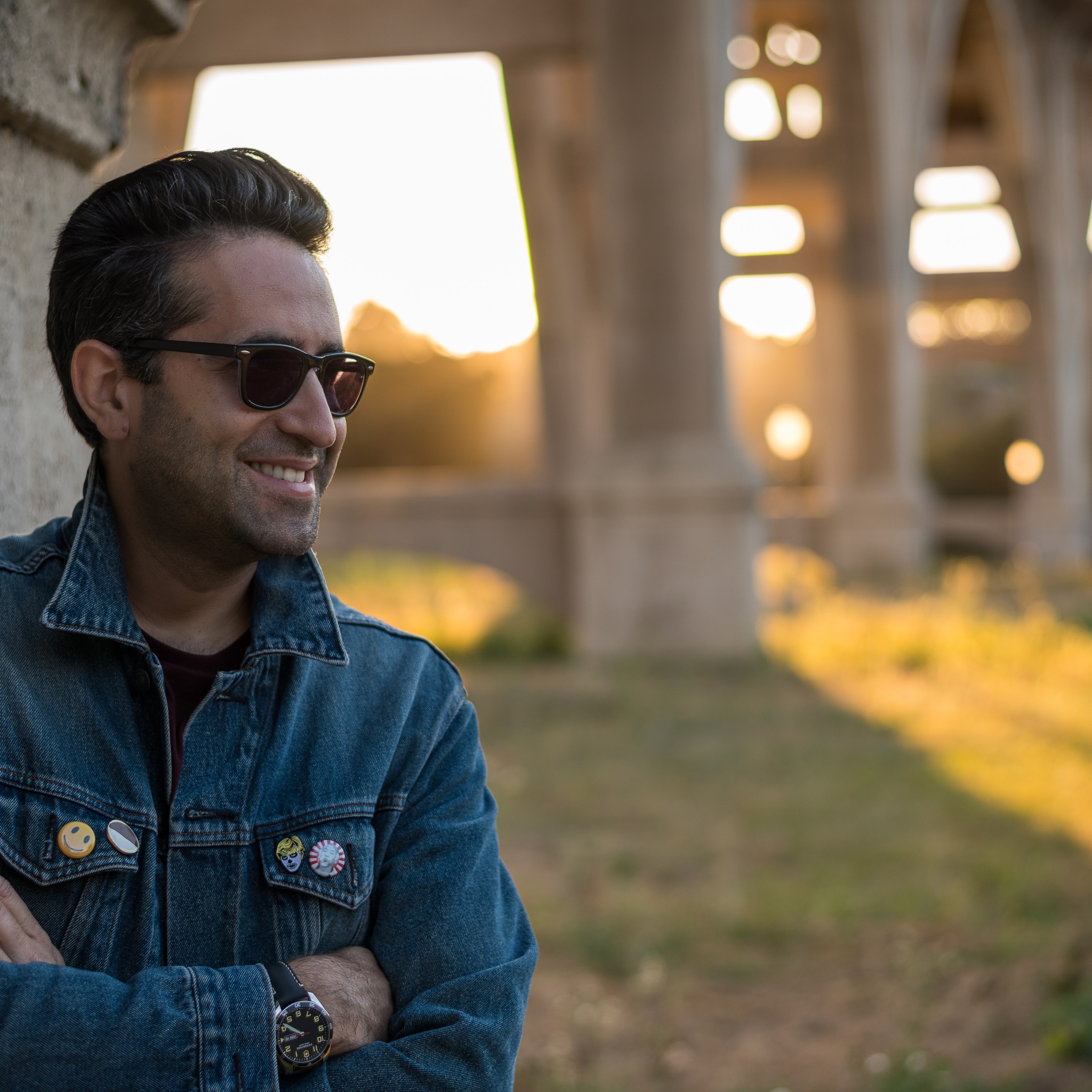
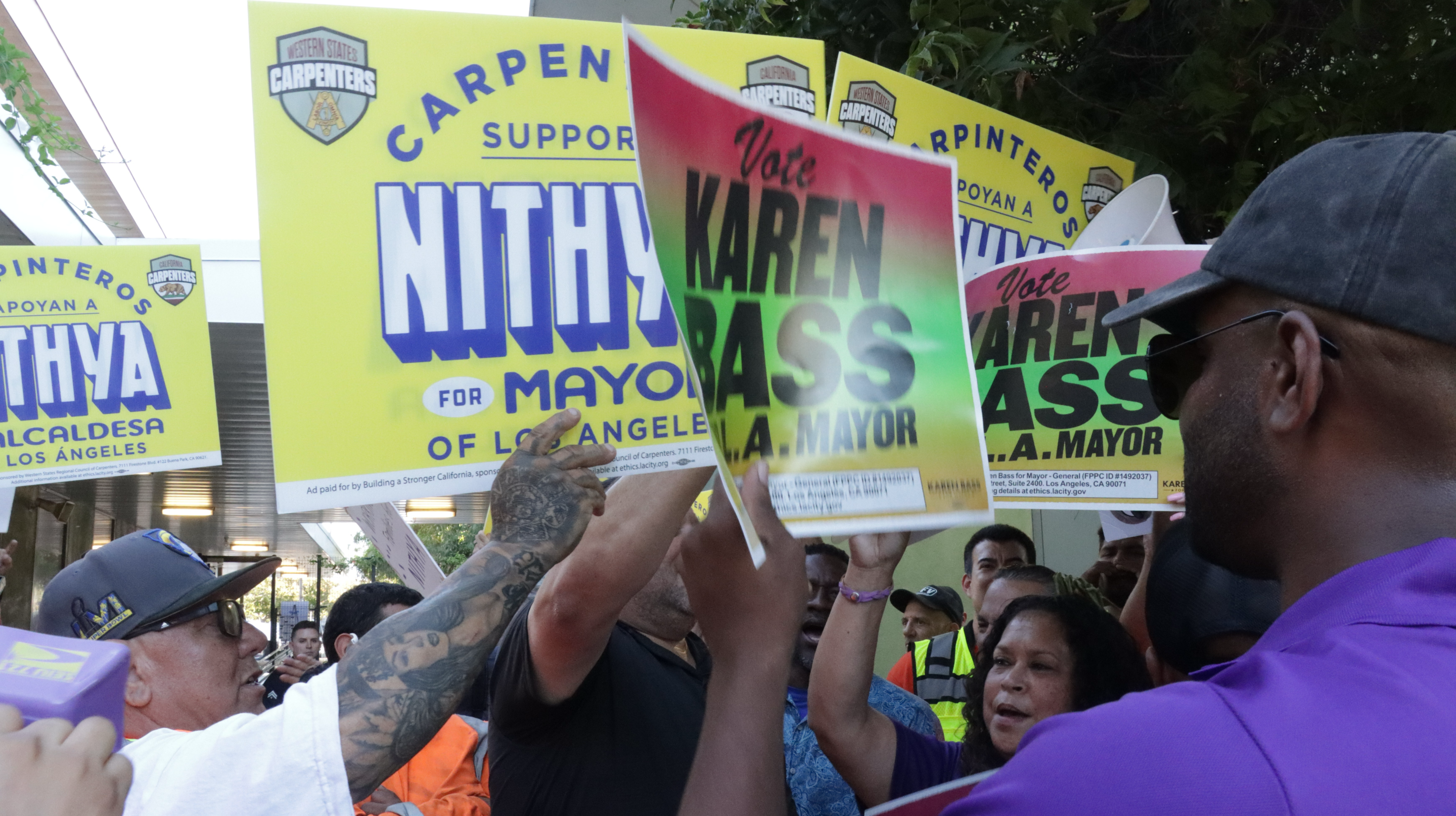
A week after Mayor Karen Bass made one of the dumbest “own goals” in L.A. political history, mayoral candidate and L.A. City Councilmember Nithya Raman is still riding high on the public backlash against Bass’ trashing of street vendors at their first debate.
“If you come for our street vendors, you're coming for the heart of L.A.,” Raman said at a hastily-set-up campaign event next to Brothers Cousins Tacos, a popular street taqueria on the Westside’s Sawtelle Boulevard, on Wednesday night.
If you don’t recall, at the first mayoral debate at the Sherman Oaks Homeowners Association last week, Bass said that street vendors should be in “certain locations,” and compared vendors to encampments of unhoused people if they’re set up next to brick-and-mortar restaurants.
The Raman campaign event was ostensibly put together to announce that she had just published a nine-point plan laying out what she would do if she was elected mayor to change city policy towards street vending.
But in a three-minute speech, Raman spent the majority of the time talking about how important street vending was to L.A.'s culture and about 30 seconds describing her policy.
Despite this blatantly light-on-substance politicking, it’s still nice to hear support for some of the hardest-working, most maligned, politically powerless groups in L.A. from a candidate running for the highest government office in the city. After decades of watching the city, cops, and goons of ICE and CBP harass and kidnap street vendors.
The plans Raman did share on her campaign website are thankfully a little less vague.
If elected mayor in the November election, Raman wants to:
Create an “Immigrant Economic Opportunity Hub,” where vendors can get properly permitted, legal advice, and even microloans; create “opt-in” vending zones with shared sinks, restrooms, and shade, including near areas that are hosting the upcoming Olympic Games.
Raman also wants to expand the county’s free food cart program, lobby the county and state government to make fresh cooking permits easier to obtain, and work with community groups and the City Attorney’s office to spread awareness and resources to unlicensed vendors in order to get them properly permitted.
When I spoke with Raman after her short speech at Brothers Cousins Tacos, she said she envisioned either Bureau of Street Services, Bureau of Sanitation, or WorkSource Center employees leading the educational outreach program.
She also defended her history of changing city policy towards street vendors. In 2024, the L.A. City Council passed a bill that Raman and fellow City Councilmember Curren Price (now being charged with embezzlement and corruption) introduced to drop the street vending permit fee from $541 to $27.51.
When I reached out to Mayor Bass’ campaign about its policy towards street vendors, the Mayor’s team sent a statement that touted the mayor’s investment in the city and the County’s Sidewalk Vending Cart program as well as the mayor’s recent order stopping the LAPD from issuing criminal citations to street vendors in MacArthur Park under the pretext that vendors were breaking the city’s anti-homeless laws against camping in public spaces.
“The Mayor and her team will continue meeting with street vendors to implement policies and programs based on their needs. Street vending is a quintessential part of L.A.’s world-class food scene and a livelihood for thousands of hardworking Angelenos. Supporting L.A.’s street vendors is more important than ever given ongoing attacks by ICE,” a spokesperson for Bass’ reelection campaign wrote in an email.
All of which is to say, Bass realizes that she has messed up by bad-mouthing street vendors.
All of which is to say, Bass realizes that she has messed up by bad-mouthing street vendors.
Sergio Jimenez, a senior community organizer with Community Power Collective, a group that organizes and advocates for street vendors in L.A., said that he’d like to see the city set up a department of street vending to issue permits, provide education, file complaints, and seek investment, similar to New York City’s Office of Street Vendor Services, which was created back in March by Mayor Zohran Mamdani.
The city can also create more commissary space, where street vendors can cook and store their food and carts, he added.
The city could also incorporate street vendors into city events, and not succumb to myths that the nearly 80,000 to 100,000 street vendors across the city (his estimate) are not in competition or trying to undercut brick-and-mortar restaurants, Jimenez said.
“I think historically street vendors, primarily because they’re immigrants, have never been able to really get into the full attention of politicians and [realize] that they are legitimate businesses because there's an entire legal process for them to follow,” he says. “I think that is a lack of really understanding street vending in general because there's massive costs.”
Vendors can invest up to $20,000 for carts, plus possibly hundreds of thousands of dollars in other costs, like supplies, food, and rent for diminishing commissary space, Jimenez said.
“That's a major investment,” he says. “Brick and mortars have a similar investment to open up a business, but they have credit. They have citizenship. They have language, possibly education, like economic education. A lot of these vendors, the formalized education that they receive is because they've been engaged with vending campaigns, or us, or through programs that we have pushed for them to have that access to education. Nothing has really come out of the city or the county. It's always advocacy that we initialize.”
In 2018, Community Power Coalition lobbied the California state government to pass a street vending decriminalization law. They, along with other community groups and two street vendors, won a settlement in a lawsuit against L.A.’s seven “no-vending zones.”
They, along with other community groups and two street vendors, won a settlement in a lawsuit against L.A.’s seven “no-vending zones.”
Jimenez said the CPC should also get credit for lobbying the city council to reduce street vending fees from $541 to $27.51.
“All street vendors work hard every day,” says a Westside food vendor who asked to remain anonymous for fear of retaliation from the city or federal immigration agents. “It’s not an easy business like people think. For example, I’m 26 years old, I’ve been working in the street for a year, and my back already is starting to hurt because I pick up heavy boxes every day. It’s not easy.”
The vendor, who immigrated from an Eastern European country a couple of years ago after finishing culinary school, said they started to cook food on the street after working in a number of restaurant kitchens.
Although they're licensed to sell food at events, they’re not fully licensed to sell food on the street because they don’t know how to get fully licensed, they said.
Despite that, they work hard to keep their business sanitary.
“We use hand sanitizer,” the vendors says. “We have a refrigerator. We keep all our meat before we start cooking, all salsas, all vegetables. We have a generator, like, it takes time, it takes energy from you, but you gotta do it the right way, so people don't get poisoned. It's the main thing about the food industry. I have a food handler certificate, too.”
Their dream, they said, is to one day own a brick-and-mortar restaurant.
“I want the people to come,” they tell us. “They sit, they eat food, you know, but I have to start from something.”